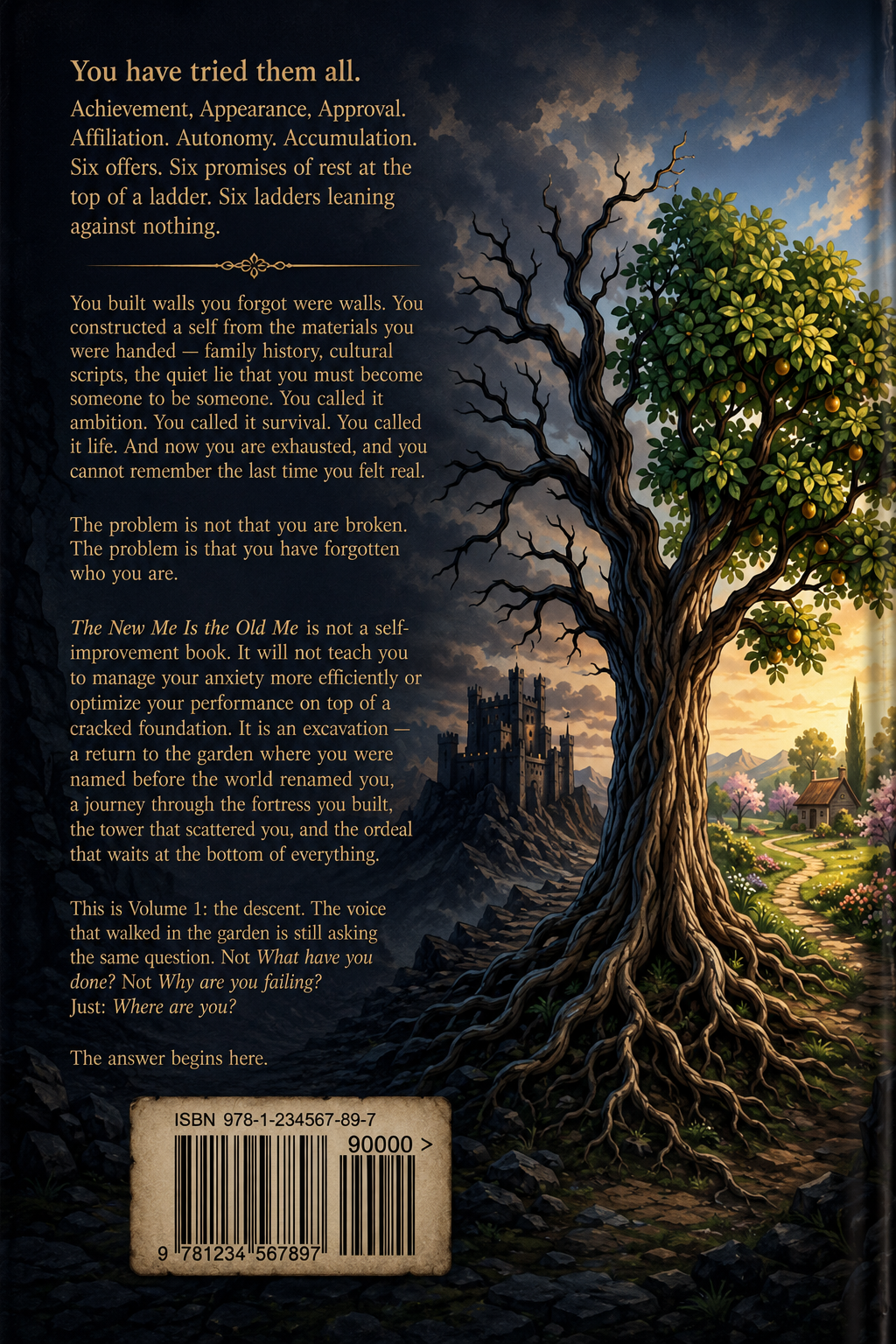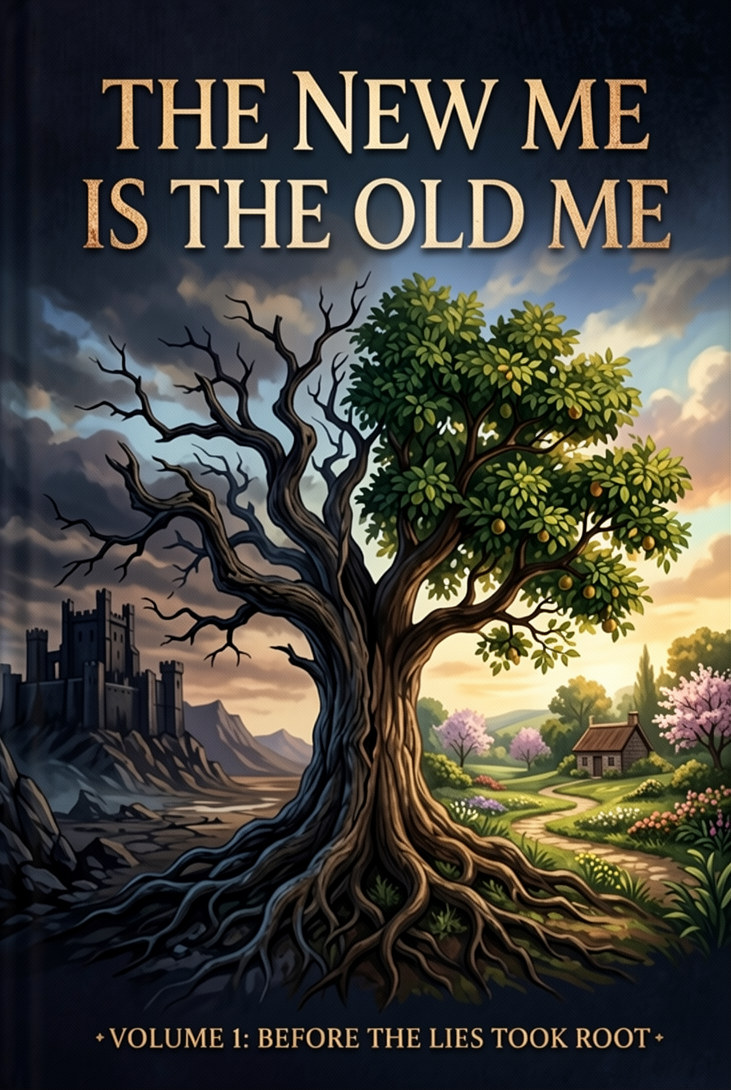
The New Me Is the Old Me
A book about identity that traces the self from Eden to the algorithm — and finds that who you really are was never lost, only buried.
Free PDF. No spam. Unsubscribe anytime.
What You'll Get
Preface & A Word Before You Begin
Why every book about identity starts in the wrong place — and why this one starts with a crash.
Chapter 1 — The Wreckage We Begin With
We do not begin at Genesis. We begin here. A diagnostic opening that names the six hungers driving every human life before you even knew they had names.
Chapter 2 — The Fortress
The heat came first. How the false self is built — brick by brick, wound by wound — and why the walls that once protected you now keep you imprisoned.
Who This Book Is For
If you've ever felt that the person you show the world isn't quite the person you are — that somewhere beneath the performance, the competence, the careful architecture of the self you've built, there's something truer that got buried along the way — this book was written for you.
It's not self-help. It's archaeology. Thirty-four chapters tracing identity from the Garden to the Enlightenment, from Babel to the attention economy, from the wound that shaped you to the name you didn't earn.
"The question is not Who am I? It is Whose am I? And the answer to that better question, when it comes, will not arrive as a philosophy or a program. It will arrive as a body — flesh and bone, breathing and bleeding — on a hill outside a city wall."
About the Book
The New Me Is the Old Me is a work of contemplative nonfiction — part theology, part psychology, part cultural diagnosis. At 172,000 words across 34 chapters, it weaves together the Two Streams of grace and gnosis, the six hungers of the A5 model, the Enlightenment's dark inheritance, the architecture of Babel, and the quiet insistence of a Voice that has been walking in the garden since the beginning, asking the same question: Where are you?